
Gift and occasion content
Plant Gifts for Parents Who Love Cute Home Products
Jun
Plant Gifts for Parents Who Love Cute Home Products starts with a simple question: What plant gift works for parents?
The practical answer is this: Target adult children buying for parents. Keep the setup visible, make the first step small, and build a routine that matches the room where the plant actually lives.
Short answer
Target adult children buying for parents.
For gift buyers, a good plant gift should feel personal without handing the recipient a complicated new responsibility.
If you are comparing plant gift for parents, think beyond the object itself: color, first-week care, and delivery timing all shape whether the gift gets used.
For PlantCareBot, this is the core idea: plant care should live where the plant lives. A reminder hidden on a phone can be dismissed, but a friendly planter on a desk, shelf, or family plant corner becomes part of the room.
Start with the smallest useful routine
A strong gift guide does not need to be complicated. The goal is to make the next care decision obvious enough that someone can repeat it on a normal day, not just when they feel motivated.
- Who the gift is for
- When it works
- Color choice
- Shipping timing
- Care note idea
Use observation before action
Most plant mistakes happen when people act before they check. A better habit is to slow down for ten seconds, look at the leaves, touch the soil if appropriate, and then decide what the plant needs.
- Ask: What do you notice?
- Check: Is the soil dry, damp, or wet?
- Decide: Does the plant need water today, or just attention?
- Record: Mark the chart, draw one change, or say the observation out loud.
Set up the space for success
The physical setup matters more than most people expect. If the plant is in one place, the care cue is somewhere else, and the water is across the room, the routine will feel larger than it really is. Put the pieces together so the habit can happen in one place.
- A stable place for the planter where it will not be bumped during play.
- A small watering cup that limits how much water can be added at once.
- A simple chart, notebook, or sticky note for observations.
- A towel or tray nearby so small spills do not become a big event.
Where PlantCareBot fits
PlantCareBot is most useful when the owner wants a visible care cue and a small object that makes the plant feel more personal.
The product does not remove the need to choose a suitable plant, but it can make the daily routine easier to remember.
The color lineup also matters: a planter that fits the room is more likely to stay in sight, which is exactly where a reminder should be.
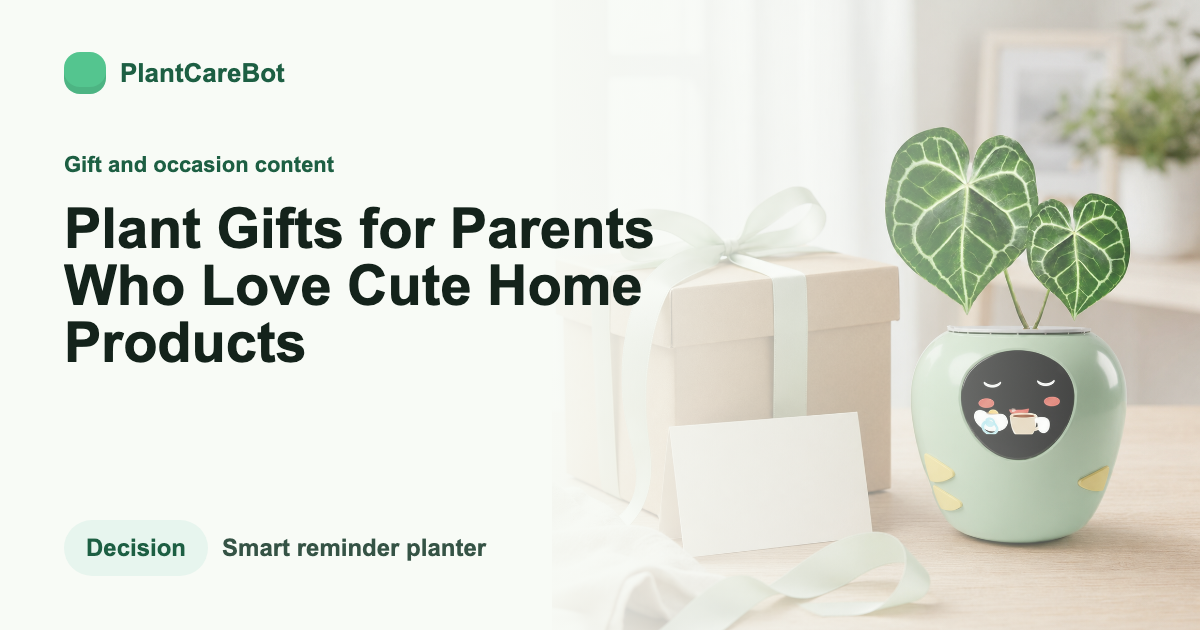
A good supporting visual for this topic would be a parent gift scene. It gives the owner something concrete to copy instead of leaving the routine as a vague intention.
Common mistakes to avoid
- Giving a plant gift that creates more work than delight.
- Choosing a color or plant size that does not fit the recipient's space.
- Waiting until the last shipping window for birthdays, holidays, or teacher gifts.
Questions to ask during the routine
Good questions keep the routine from becoming a command. They also help children learn that plant care is based on observation, not guessing. Use the same few prompts until they become familiar.
- What changed since the last time we checked?
- Does the soil feel different today?
- What do you think the plant needs next?
- What should we try for one week and then compare?
When to adjust the plan
A reminder planter is a care cue, not a magic fix. If the plant shows pests, mold, root rot, yellowing, or stress from poor light, use trusted plant-care guidance and change the environment before blaming the routine.
The useful habit is to treat problems as information. Maybe the plant needs a brighter spot. Maybe the watering amount is too high. Maybe the schedule works during school or work weeks but fails during travel. Adjust one thing at a time so you can tell what helped.
Make the first week easy
For the first week, keep the routine short. Choose one place for the planter, one check-in time, and one tiny job. Once that feels natural, add a chart, a journal, a classroom note, or a second plant activity.
If the routine breaks, restart without drama. A missed day is not failure; it is information about where the cue needs to be stronger. Move the planter, simplify the routine, or choose a check-in time that already exists in daily life.
Choose a PlantCareBot color if you want a friendly smart reminder planter for a child, family desk, classroom, dorm, or small plant corner. You can also start from the PlantCareBot homepage to see the product, color options, and current price.
Related PlantCareBot Guides
Keep reading with related guides that match this PlantCareBot care routine.
