
Parent-child plant care
What to Do When Kids Overwater a Plant
Jun
What to Do When Kids Overwater a Plant is a practical question for families because plant care sits in a rare middle ground: it is real responsibility, but it can stay small, kind, and visible.
The goal is not to create a perfect little gardener. The goal is to help a child notice a living thing, understand that care happens in small repeatable moments, and build confidence through a routine that the family can actually keep.
Why this matters for families
Overwatering can become a useful learning moment when the child learns to check before acting.
For PlantCareBot, this is the core idea: plant care should live where the plant lives. A reminder on a phone can be ignored, but a friendly planter on a desk or shelf becomes part of the room.
If your family is searching for child overwatered plant, start with a simple rule: make the task easy to see before you make it easy to complete.
Start with a small routine
A strong family routine does not need to be complicated. Use the same few steps each time so the child learns to observe before acting.
- Pause watering and check whether the soil is still wet.
- Move the plant to a bright, stable place if the plant tolerates it.
- Talk through what the plant is showing instead of blaming the child.
- Change the routine from 'water the plant' to 'check the plant.'
A kid-friendly check-in script
When the plant becomes part of a family rhythm, the language matters. Try short questions that invite observation instead of yes-or-no commands.
- Ask: What do you notice?
- Check: Is the soil dry, damp, or wet?
- Decide: Does the plant need water today, or just attention?
- Record: Mark the chart, draw one change, or say the observation out loud.
Set up the space for success
The physical setup matters more than most families expect. If the chart is in one room, the plant is in another room, and the watering cup is under the sink, the routine will feel like work. Put the pieces together so the habit can happen in one place.
- A stable place for the planter where it will not be bumped during play.
- A small watering cup that limits how much water can be added at once.
- A simple chart, notebook, or sticky note for observations.
- A towel or tray nearby so small spills do not become a big event.
Where PlantCareBot fits
PlantCareBot is best used as a visible cue, not as a replacement for basic plant knowledge or adult guidance.
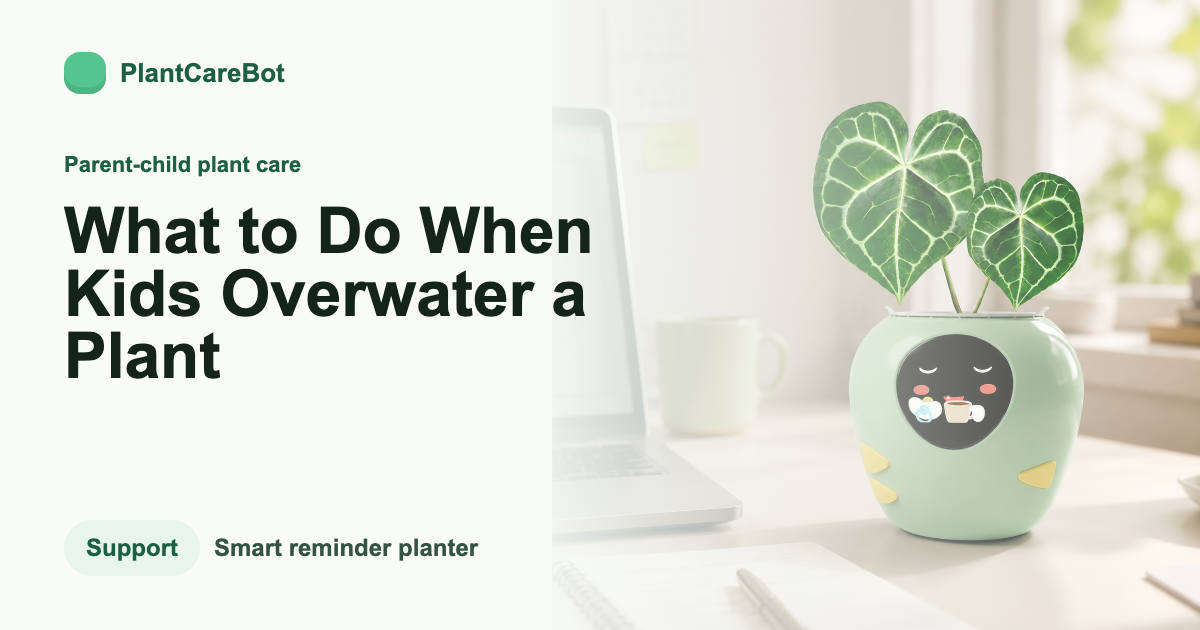
The friendly face display gives the plant personality, which can make children more likely to stop and notice it during the day.
Because PlantCareBot is available in several soft colors, parents can also make the setup feel personal instead of clinical.
This is especially useful for children because the reminder is not abstract. The child can see the planter, see the plant, and connect the face on the pot with the living thing inside it. That small emotional bridge is often what makes the routine stick.
Common mistakes to avoid
- Punishing the child for trying to help.
- Adding more water because the leaves look sad.
- Keeping a watering routine that rewards action instead of observation.
Questions to ask during the routine
Good questions keep the routine from becoming a command. They also help children learn that plant care is based on observation, not guessing. Use the same few prompts until they become familiar.
- What changed since the last time we checked?
- Does the soil feel different today?
- What do you think the plant needs next?
- What should we try for one week and then compare?
When to step in as the adult
Parents should still supervise plant choice, placement, water amount, and any tools or plant treatments. If a plant shows serious disease, pests, mold, or damage, use trusted plant-care guidance rather than treating a reminder planter as a diagnosis tool.
The adult's job is to protect the plant and the child from avoidable frustration. Step in when the pot is unstable, the plant may be unsafe, the soil smells sour, or the child wants to water again before checking the soil. Keep the tone calm. The point is to teach noticing, not to make plant care feel fragile.
Make the first week easy
For the first week, keep the routine short. Choose one place for the planter, one check-in time, and one tiny job your child can own. Once that feels natural, add a chart, a journal, or a second plant activity.
If the routine breaks, restart without drama. A missed day is not failure; it is information about where the cue needs to be stronger. Move the planter, simplify the chart, or choose a check-in time that already exists in family life.
Choose a PlantCareBot color if you want a friendly smart reminder planter for a child, family desk, or small plant corner. You can also start from the PlantCareBot homepage to see the product, color options, and current price.
Related PlantCareBot Guides
Keep reading with related guides that match this PlantCareBot care routine.
